Ah, the eternal debate for car buyers: rugged utility versus sophisticated comfort! It’s a choice many of us face, especially when our lifestyles demand a vehicle that can keep up with everything from daily commutes to weekend adventures.
You might be eyeing a sturdy, no-nonsense workhorse, or perhaps a refined family hauler packed with the latest tech. I know the feeling – picking the perfect ride feels like a huge commitment, and you want to be absolutely sure you’re making the right call.
Lately, I’ve noticed a real buzz around lifestyle vehicles, with more people than ever looking for that sweet spot between capability and everyday drivability.
The SsangYong Rexton Sports (or Musso, as some of you might know it internationally) and the Hyundai Santa Fe are two prime examples, each dominating their respective corners of the market but often attracting similar buyers who value versatility.
While one promises robust performance and serious towing muscle, the other aims for an upscale experience with cutting-edge features and family-friendly practicality.
It’s like comparing a trusty multitool to a sleek, smart device – both incredibly useful, but for very different reasons! With the automotive landscape constantly shifting, especially with new electrification trends and evolving consumer preferences for utility vehicles, understanding where these two stand is more crucial than ever.
Having spent my fair share of time behind the wheel, I can tell you that the differences go far beyond just what’s on paper. From how they *feel* on a long road trip to how easily they handle a packed grocery run or a heavy load, every detail matters.
The Santa Fe, for instance, has really stepped up its game, winning awards and seeing massive sales increases, especially with its hybrid variants, proving that families are absolutely loving its blend of space, efficiency, and design.
But then you look at the Rexton Sports, a vehicle celebrated for its undeniable strength and practicality, especially for those who need a true workhorse or love the great outdoors.
It’s a fascinating cross-section of the market, and figuring out which one truly fits *your* life can be a real head-scratcher. Let’s dive deeper and uncover all the crucial details that will help you decide!
Capability Versus Comfort: Defining Your Driving Lifestyle

The Practicality of a Workhorse vs. The Polish of a Family SUV
It’s fascinating how two vehicles can occupy similar price points but cater to wildly different aspirations. On one hand, you’ve got the SsangYong Rexton Sports, often known as the Musso in many markets – a vehicle that doesn’t just promise utility, it *embodies* it.
From the moment I first laid eyes on one, its rugged stance screamed “get things done.” It’s built for those who aren’t afraid to get a little mud on their tires, who regularly haul gear, tow a caravan, or just need something incredibly robust for their day-to-day.
My mate, a landscape gardener, swears by his Musso; he says it’s an extension of his toolkit, handling everything from bags of soil to heavy-duty trailers without breaking a sweat.
It’s not just about the raw power, it’s about the sheer confidence it instills when you know your vehicle is purpose-built for the tough stuff. The interior, while comfortable enough, leans into durability rather than outright luxury, which, for its target audience, is often a huge plus.
You won’t be constantly fretting over spilled coffee or muddy boots, and that peace of mind is invaluable.
Finding the Sweet Spot: Where Design Meets Daily Demands
Then there’s the Hyundai Santa Fe, a nameplate that has truly evolved into a sophisticated offering, consistently pushing the boundaries of what a family SUV can be.
When I first took the latest generation for a spin, I was genuinely impressed by how much it had matured. It’s no longer just a practical seven-seater; it’s a statement of style and comfort.
The designers at Hyundai have poured a lot of effort into making the Santa Fe feel premium, from the sweeping lines of its exterior to the thoughtfully arranged cabin.
It’s the kind of car that effortlessly blends into the school run, weekend trips to the coast, or even a fancy night out. I remember picking up my in-laws in a Santa Fe, and they were immediately struck by the spaciousness and plushness of the interior.
They’ve always owned luxury sedans, so for them to compliment an SUV speaks volumes. It’s clear that Hyundai is targeting buyers who want a vehicle that can handle family duties with ease but also offers a refined driving experience, a quiet cabin, and all the creature comforts you’d expect from a higher-end segment.
It’s about making every journey, no matter how mundane, feel a little more special.
Under the Hood: Power, Performance, and Practicality
Engine Choices and Their Real-World Implications
When it comes to what’s under the bonnet, both vehicles offer compelling options, but with very different philosophies. The SsangYong Rexton Sports (Musso) typically comes with a robust diesel engine – think strong torque, which is absolutely crucial for towing and hauling.
I’ve heard countless stories from owners who rave about its pulling power. One owner I spoke to, who frequently tows a horse float, mentioned how effortlessly it tackles inclines that would leave other vehicles gasping.
This isn’t just about headline figures; it’s about the real-world ability to move heavy loads consistently and reliably. The diesel engine, while perhaps not the quietest or most refined, is a workhorse designed for longevity and strenuous tasks.
Fuel efficiency, while important, often takes a backseat to sheer grunt in this segment, and Musso delivers precisely that. It’s built for those who need unwavering power rather than zippy acceleration for urban dashes.
The focus here is on robust mechanicals that can withstand demanding usage day in and day out, ensuring that when you hitch up a trailer or load up the bed, the vehicle responds with confidence and capability.
Balancing Efficiency with Everyday Driving Dynamics
The Hyundai Santa Fe, on the other hand, offers a more diverse powertrain lineup, reflecting its broader appeal. You’ll often find it with petrol engines, and increasingly, with efficient hybrid and plug-in hybrid options.
This is where the Santa Fe truly shines for the modern family. My sister recently opted for a Santa Fe Hybrid, and she can’t stop talking about the fuel savings during her daily commute and how smooth the power delivery is.
It’s a completely different driving experience – more refined, quieter, and generally more economical for urban and highway driving, where consistent heavy towing isn’t the primary concern.
The hybrid systems not only improve fuel economy but also provide a surprisingly responsive feel off the line, making city driving less of a chore. While the Santa Fe can certainly handle a lighter trailer, its powertrains are tuned more for passenger comfort and efficiency rather than heavy-duty hauling.
It’s designed to provide ample power for overtaking and highway cruising, all while keeping running costs manageable and providing a generally serene cabin environment.
It really boils down to whether your priority is sheer pulling power or a more balanced approach to performance and economy.
Interior Ambience: From Functional to First-Class
Crafting a Cabin for Durability and Utility
Stepping inside the SsangYong Rexton Sports (Musso), you’re greeted with an interior that prioritizes ruggedness and straightforward functionality. It’s designed to be a practical space, one where you don’t feel guilty about tracking in a bit of dirt after a weekend adventure or a busy day on a job site.
I’ve always appreciated vehicles that understand their purpose, and the Musso certainly does. The materials chosen are generally hard-wearing and easy to clean, which, for many owners, is far more important than plush leather or piano black trim.
While it offers modern conveniences like a touchscreen infotainment system and comfortable seating, the overall aesthetic leans towards utility. The controls are intuitive and robust, often with large, easy-to-grab knobs and buttons that are simple to operate even with work gloves on.
Storage compartments are generous and designed for real-world items, not just small trinkets. My friend who runs a small construction business actually prefers the Musso’s interior because it’s so forgiving; he says it’s robust enough to handle the wear and tear of tools and equipment, making it an ideal mobile office and transport solution for his team.
Elevating the Experience: Luxury and Digital Integration
The Hyundai Santa Fe, however, takes a distinctly different approach, aiming for an interior that feels genuinely upscale and technologically advanced.
Each time I’ve been in one, I’m struck by the attention to detail and the quality of materials. Hyundai has clearly invested heavily in creating a cabin that rivals much pricier European SUVs.
You’ll find soft-touch surfaces, sophisticated ambient lighting, and often premium upholstery options that create a truly inviting atmosphere. The digital integration is also top-notch, with large, crisp infotainment screens and digital driver displays that are both visually appealing and highly functional.
Features like wireless charging, panoramic sunroofs, and advanced climate control systems are common, turning the Santa Fe into a true sanctuary on wheels.
I recall test-driving a new Santa Fe and being particularly impressed by the intuitive layout of the centre console and the clarity of the infotainment system – it felt incredibly modern and user-friendly, a far cry from the utilitarian interfaces of some competitors.
It’s designed for families who spend a lot of time in their vehicle and want every journey to be as comfortable, entertaining, and connected as possible.
On the Road: Driving Dynamics and Daily Driveability
The Uncompromising Ride of a Body-on-Frame
Driving the SsangYong Rexton Sports (Musso) is a distinct experience, largely defined by its body-on-frame construction. This traditional setup, while fantastic for durability and heavy-duty tasks, means you’re generally in for a more truck-like ride.
You feel the road a bit more, and while modern iterations have significantly improved comfort, it’s not going to float over bumps like a unibody SUV. However, this is precisely what gives it its incredible strength and off-road capability.
When I’ve driven a Musso, especially on unsealed roads or through light trails, there’s a sense of invincibility. It feels incredibly solid and capable, soaking up rough terrain with a confidence that few other vehicles can match.
The steering can be a little less direct than a car-based SUV, but that’s a trade-off many are willing to make for its ruggedness. It truly comes alive when you’re towing a heavy load or navigating challenging conditions, demonstrating why its construction is so highly valued by those who genuinely put their vehicle to work.
For anyone needing a true go-anywhere, do-anything machine, this distinctive driving characteristic isn’t a flaw, but a fundamental advantage.
The Refined Manners of a Modern SUV
In stark contrast, the Hyundai Santa Fe offers a driving experience that’s much closer to a passenger car, thanks to its unibody construction. It’s designed for comfort and refinement, excelling in urban environments and on long highway cruises.
When I’ve driven the Santa Fe, I’ve always been impressed by how smoothly it glides over bumps and how quiet the cabin remains, even at higher speeds.
The steering is light and precise, making it easy to manoeuvre in tight parking lots or through busy city streets. It feels composed and stable, inspiring confidence whether you’re navigating rush hour traffic or embarking on a cross-country trip.
While it might not have the raw off-road prowess of a body-on-frame truck, it’s perfectly capable for light off-roading, gravel tracks, and snowy conditions, especially with its available all-wheel-drive systems.
The focus here is on providing a comfortable, effortless, and predictable driving experience for the vast majority of daily driving scenarios. It’s a vehicle that reduces driving fatigue and makes every journey, regardless of distance, feel pleasant and controlled, proving that family practicality doesn’t have to sacrifice driving enjoyment.
Ownership Experience: Value, Maintenance, and Resale
The Long-Term Commitment to a Practical Workhorse
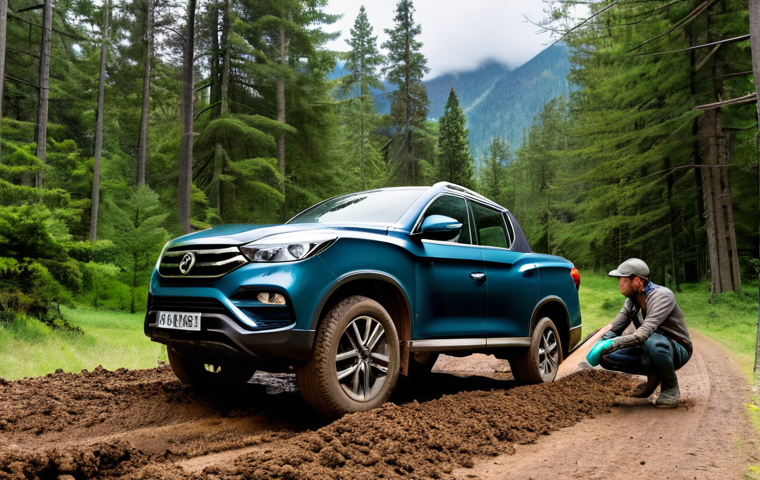
When you consider the SsangYong Rexton Sports (Musso), you’re often looking at a vehicle known for its strong value proposition right off the bat. It tends to be priced very competitively, offering a huge amount of utility and capability for your money.
Maintenance costs are generally reasonable, and because it’s built for durability, it often stands up well to hard work. I’ve heard from many Musso owners that they appreciate the straightforward mechanics and the ease of sourcing parts, especially if you’re in a market where SsangYong has a strong presence.
Resale value can vary by market, but for those seeking a reliable and capable ute, its reputation for robustness helps maintain a steady demand. This vehicle is often bought by people who plan to keep it for a long time, viewing it as an investment in their business or active lifestyle rather than a temporary purchase.
The long warranty periods offered in many regions also add a significant layer of peace of mind, reinforcing its image as a dependable, long-term partner.
It’s a vehicle that asks for little fuss but delivers immense practicality over its lifespan.
Investing in Refinement and Future-Proof Technology
The Hyundai Santa Fe, on the other hand, often represents a slightly higher initial investment, but it counters this with a strong reputation for reliability, advanced features, and generally excellent resale values.
Hyundai has truly elevated its brand perception, and the Santa Fe benefits from this, holding its value well in many markets. Its advanced technology, including hybrid powertrains and comprehensive safety suites, means it often remains relevant and desirable for years to come.
Service costs are typically on par with other mainstream family SUVs, and Hyundai’s extensive dealer network makes maintenance convenient. I’ve seen countless examples of Santa Fe models from previous generations still looking great and running strong, which speaks volumes about their build quality and longevity.
Investing in a Santa Fe often means you’re buying into a vehicle that will continue to offer comfort, safety, and a premium feel for many years, making it a sound long-term family asset.
It’s a choice for those who value modern conveniences and a sophisticated ownership experience, alongside practical family transport.
Safety First: Protecting Your Most Precious Cargo
Robust Foundations and Essential Protection
When it comes to safety, the SsangYong Rexton Sports (Musso), with its body-on-frame construction, inherently offers a robust foundation. This solid chassis provides excellent protection in certain types of impacts and is a significant reason why many prefer it for heavy-duty tasks or off-roading where structural integrity is paramount.
While it might not always boast the absolute latest in cutting-edge, semi-autonomous driving aids found in some unibody SUVs, modern Mussos are increasingly equipped with a comprehensive suite of active and passive safety features.
Think multiple airbags, ABS, electronic stability control, and often advanced driver assistance systems (ADAS) like autonomous emergency braking, lane departure warning, and blind-spot monitoring.
I always tell my friends that basic, solid engineering is the first line of defense, and the Musso certainly delivers on that front. It’s designed to be a strong, protective shell for its occupants, giving you confidence when you’re driving with a loaded tray or towing a heavy trailer.
It’s about building a vehicle that can withstand a lot, ensuring a foundational level of safety that is absolutely essential for its intended use cases.
Cutting-Edge Systems for Ultimate Peace of Mind
The Hyundai Santa Fe, however, has consistently been at the forefront of offering advanced safety technology, often achieving top ratings from organizations like Euro NCAP and the IIHS.
Hyundai places a huge emphasis on integrating its SmartSense safety suite, which includes an impressive array of features designed to prevent accidents and mitigate their severity.
We’re talking about sophisticated systems like highway driving assist, smart cruise control with stop-and-go function, blind-spot view monitor that projects a camera feed onto the digital cluster, rear cross-traffic collision-avoidance assist, and safe exit assist, which warns you if a vehicle is approaching when you’re trying to open a door.
These aren’t just buzzwords; they’re genuinely life-saving technologies that provide an incredible layer of protection for you and your family. I remember once when the blind-spot monitor in a Santa Fe subtly alerted me to a car I hadn’t seen – it was a small moment, but it reinforced how these systems act as an extra pair of eyes.
The Santa Fe’s commitment to safety is evident in every detail, offering a comprehensive and intelligent approach to protecting everyone on board, aiming to make every journey as secure as possible.
| Feature | SsangYong Rexton Sports (Musso) | Hyundai Santa Fe |
|---|---|---|
| Primary Focus | Utility, Towing, Workhorse Capability | Family Comfort, Refinement, Technology |
| Construction | Body-on-Frame (Truck-based) | Unibody (Car-based SUV) |
| Typical Powertrain | Diesel (High Torque) | Petrol, Hybrid, Plug-in Hybrid (Efficiency, Smoothness) |
| Ride Quality | Robust, Truck-like feel | Smooth, Car-like, Refined |
| Off-Road/Towing | Excellent capability, designed for heavy loads | Capable for light off-road, moderate towing |
| Interior Materials | Durable, Practical, Easy to Clean | Premium, Soft-Touch, Advanced Features |
| Safety Features | Solid foundations, modern ADAS growing | Comprehensive, cutting-edge SmartSense suite |
| Target Audience | Tradespeople, Adventurers, Heavy Towing Users | Families, Urban/Suburban Commuters, Tech Enthusiasts |
Final Thoughts: Which One Truly Fits Your Life?
Aligning Vehicle Choice with Your Everyday Realities
Ultimately, the decision between a SsangYong Rexton Sports (Musso) and a Hyundai Santa Fe really boils down to an honest assessment of your lifestyle and priorities.
I’ve always found that the “perfect” car isn’t about what’s trending, but what truly integrates seamlessly into your daily life. If your week involves hauling materials to a job site, towing a significant load like a boat or a large caravan, or frequently venturing off the beaten path, then the Musso is likely to be your unwavering companion.
Its rugged build and dedicated utility features are not just marketing slogans; they are fundamental aspects of its design that genuinely make your life easier in those specific scenarios.
My cousin, who runs a small farm, would laugh at the idea of using anything less robust than his Musso for his daily tasks. He needs that uncompromised strength, and for him, the minor trade-offs in urban refinement are completely irrelevant.
It’s about choosing a tool that is perfectly suited for the job, one that won’t let you down when the going gets tough.
Defining Your Comfort and Convenience Needs
Conversely, if your family’s needs lean more towards a comfortable, refined, and technologically advanced vehicle for school runs, long road trips, and general urban-to-suburban commuting, then the Hyundai Santa Fe is an incredibly compelling option.
It’s built to make every journey as pleasant and effortless as possible, surrounding you with amenities and safety features that truly enhance the driving experience.
I’ve seen first-hand how much my friends with young children appreciate the Santa Fe’s spacious interior, its quiet ride, and the plethora of charging ports and entertainment options that keep everyone happy on longer journeys.
It’s a vehicle designed to be an extension of your modern, connected life, offering convenience at every turn. You’re paying for that elevated sense of comfort, the peace of mind from advanced safety systems, and the overall premium feel that transforms mundane drives into enjoyable experiences.
Both vehicles are fantastic in their own right, but they shine in different universes, and understanding which universe you inhabit is key to making the right choice for your garage.
Closing Thoughts
So, as we wrap up this deep dive into two incredibly capable yet distinctly different vehicles, it becomes clear that there’s no universal “winner” here.
It truly boils down to what your daily life demands and what kind of driving experience truly resonates with you. Are you someone who needs uncompromised utility and rugged dependability for work or serious adventure?
Or do you prioritize refined comfort, cutting-edge technology, and a smooth, family-friendly ride? Reflect on your priorities, and trust me, the right vehicle for *your* lifestyle will stand out.
Useful Information to Know
1. Before even stepping into a dealership, take a hard look at your actual daily and weekly driving habits. How many passengers do you typically carry? Do you tow? What kind of terrain do you mostly drive on? Being brutally honest about your needs, rather than what you *think* you want, will save you a lot of time and potential buyer’s remorse. I’ve seen too many people buy a vehicle because it looks great, only to realize it doesn’t fit their lifestyle at all, ending up with something too big, too small, or simply not capable enough for their real-world demands.
2. The purchase price is just the beginning. Factor in insurance costs, fuel efficiency (especially with current fuel prices!), regular maintenance, and potential depreciation. A cheaper upfront purchase might end up costing you more in the long run if its running costs are high. Don’t forget about potential upgrades or accessories you might need, like a tow bar or roof racks – those add up quickly! Always get a few insurance quotes before committing, as rates can vary wildly based on vehicle type and your personal profile.
3. Don’t just take the car for a quick spin around the block. If you typically drive on highways, get it on a highway. If you deal with bumpy country roads, find some. Try parking it in your usual spot, and if you have child seats, see how they fit. Engage with all the features, from the infotainment to the climate control. I always encourage people to simulate their actual driving conditions as much as possible; it’s the only way to truly gauge how a vehicle will perform in *your* life.
4. While you might love your new car, the day will come when you want to sell it or trade it in. Vehicles with strong resale values can save you a substantial amount of money over time. Also, pay close attention to the warranty. A long, comprehensive warranty can provide immense peace of mind, especially with complex modern vehicles. It’s an indicator of the manufacturer’s confidence in their product, and it acts as a financial safety net against unexpected repairs.
5. Buying a car is a significant financial commitment. Take your time, compare multiple options, read reviews (like this one!), and don’t be swayed by high-pressure sales tactics. If a deal feels too good to be true, it probably is. Sometimes sleeping on it for a night or two allows you to think clearly and make a more informed, rational decision, rather than an emotional one. Remember, you’ll be living with this vehicle for years, so it’s worth getting it right!
Key Takeaways
So, what’s the ultimate takeaway from comparing these two titans of the road, the SsangYong Rexton Sports (Musso) and the Hyundai Santa Fe? It’s profoundly simple: purpose dictates choice. If your life is less about paved roads and more about payloads, if your weekends involve serious towing, off-road adventures, or hauling significant gear for work or play, the Musso’s unyielding strength, body-on-frame durability, and honest-to-goodness utility are almost certainly going to win your heart and prove their worth day in and day out. It’s a genuine workhorse, built for endurance and capability, and for those who truly need that, its value is immeasurable.
However, if your daily commute is urban-centric, your family’s comfort and safety are paramount, and you crave a refined, technologically advanced, and stylish ride for school runs, long road trips, and modern living, then the Santa Fe shines brightly. Its car-like driving dynamics, plush interior, and cutting-edge safety features make every journey a more enjoyable and secure experience, perfectly suiting the demands of a contemporary family lifestyle.
Ultimately, both are exceptional vehicles within their respective domains. The key is to genuinely assess *your* life, *your* needs, and *your* priorities, because only then can you make the choice that feels truly right and brings lasting satisfaction. Don’t just buy a car; choose a partner that truly complements your journey ahead.
Frequently Asked Questions (FAQ) 📖
Q: I’m looking for a vehicle that can genuinely handle both the rugged demands of outdoor adventures and the practicalities of daily family life. Which one—the SsangYong Rexton Sports (Musso) or the Hyundai Santa Fe—would you say offers a better overall balance for such a versatile lifestyle?
A: Oh, this is such a classic dilemma, and honestly, it really boils down to where your priorities truly lie. From my own experience, if your “adventures” often involve truly heavy lifting, serious towing, or navigating rough, unpaved terrain where a traditional SUV might struggle, then the Rexton Sports, or Musso as it’s known in many parts of the world, is undeniably the more capable beast.
I’ve personally loaded up the bed with everything from construction materials to muddy camping gear, and it just eats it up. The sheer utility of a pickup bed is something you simply can’t replicate with an SUV, and its robust ladder-frame chassis is built to take a beating.
It’s got that no-nonsense, get-the-job-done vibe that’s incredibly appealing if you’re actually doing demanding work or heading deep into the wilderness.
However, if your “adventures” are more about comfortably getting the family to a national park, hitting a ski resort, or simply enjoying a long road trip with plenty of gear inside a protected space, the Santa Fe really shines.
I’ve found that while it can handle a fair amount of light off-roading with its capable AWD systems, its true strength lies in its refined on-road manners and its exceptional family-friendly design.
It’s about comfort, safety, and having all your modern amenities at your fingertips. So, if you’re leaning towards a genuine workhorse or an off-grid explorer, the Musso is your guy.
But for a polished, versatile family hauler that still offers plenty of capability for well-trodden paths and urban escapades, the Santa Fe absolutely hits the mark.
It’s a choice between a tool and a sophisticated multi-tool, if that makes sense!
Q: Beyond just hauling capabilities, how do these vehicles feel to drive daily?
A: re they comfortable for long trips, and how do their tech features compare, especially for someone who values a connected and modern cabin experience?
A2: This is where the difference truly becomes apparent, and trust me, you feel it the moment you hit the road. When I’m behind the wheel of a Santa Fe, especially the newer models, it’s like driving a living room.
The ride is typically much smoother and quieter, soaking up bumps with a grace that makes long journeys feel far less taxing. My family absolutely loves it on road trips; there’s less road noise, the seats are often more ergonomically designed for extended periods, and you get a real sense of spaciousness and airiness in the cabin.
The technology is usually cutting-edge too – we’re talking large, intuitive infotainment screens, seamless smartphone integration, advanced driver-assist features that make highway driving a breeze, and often a premium sound system.
It’s designed to make your daily commute and your weekend getaways as comfortable and connected as possible. Now, with the Rexton Sports (Musso), you’re getting a much more traditional, truck-like driving experience.
It’s built on a ladder frame, which means it’s inherently tougher, but you will feel more of the road. It’s not uncomfortable, mind you, but it’s firmer, and you might notice more bounce on uneven surfaces compared to an SUV.
Sound insulation is good for a pickup, but it won’t be as whisper-quiet as a Santa Fe. The tech tends to be more practical and less flashy; you’ll get essential connectivity, a decent infotainment system, and necessary safety features, but it’s usually focused on functionality rather than luxury.
When I drive the Musso, I feel rugged and capable, ready for anything, but when I drive the Santa Fe, I feel pampered and relaxed. It’s truly a trade-off between uncompromising robustness and refined comfort.
Q: Considering the long haul, what should I expect in terms of the overall ownership experience, including fuel economy, maintenance, and potential resale value for the Rexton Sports/Musso versus the Santa Fe?
A: Great question, because buying a vehicle isn’t just about the initial price tag; it’s a long-term relationship! When it comes to fuel economy, generally speaking, you’ll likely find the Santa Fe, especially if you opt for one of the increasingly popular hybrid or plug-in hybrid variants, to be more efficient in everyday driving.
Its unibody construction and typically smaller, more advanced engines are optimized for passenger car efficiency. I’ve noticed a significant difference in my wallet on regular urban commutes.
For the Rexton Sports (Musso), with its heavier build and larger engines designed for torque and hauling, you should anticipate a bit more thirst at the pump, particularly if you’re regularly using it for its intended heavy-duty purposes or towing.
It’s built for strength, and that often comes with a trade-off in fuel efficiency. Regarding maintenance, both brands have generally proven reliable. Hyundai’s widespread dealer network and parts availability for the Santa Fe usually make servicing straightforward and competitively priced in most markets.
The Musso, being a more specialized utility vehicle, might have slightly more specific maintenance requirements if you’re truly putting it through its paces (e.g., more frequent checks on suspension, brakes, and drivetrain components under heavy loads).
However, its robust construction also means it’s built to last. As for resale value, this is where things get interesting. Mainstream SUVs like the Santa Fe, with their broad appeal and constant demand, tend to hold their value quite well in the used car market.
They’re a safe bet. The Rexton Sports/Musso appeals to a more niche market – buyers who specifically need a pickup or a heavy-duty utility vehicle. If you find the right buyer in that segment, it can hold its value strongly because of its unique capabilities.
However, on the broader used car market, it might take a little longer to sell than a popular SUV simply because the pool of specific buyers is smaller.
My advice? If you plan on really working the Musso, its utility will be its best resale feature, showing it’s a true workhorse. For the Santa Fe, its comfort, features, and brand reputation are what maintain its appeal.
📚 References
Wikipedia Encyclopedia
구글 검색 결과
구글 검색 결과
구글 검색 결과
구글 검색 결과
구글 검색 결과