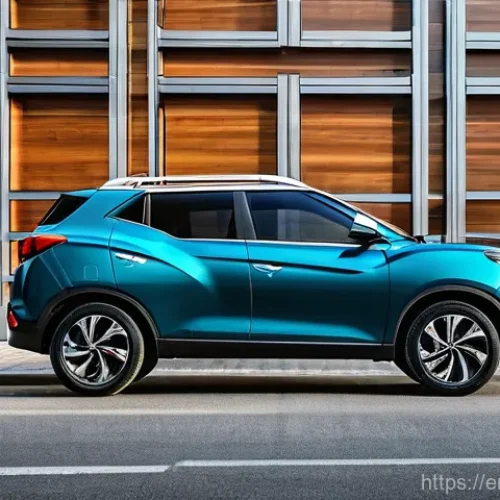
Unleash Your Adventures SsangYong Torres Long Distance Driving Performance Examined

webmaster

쌍용 토레스의 장거리 주행 성능 - **Prompt:** A cozy and spacious interior shot of a SsangYong Torres SUV on a scenic highway. In the ...

Oh, the open road! There’s nothing quite like packing up, setting the playlist just right, and heading out for a long drive, is there? But let’s be real, a good road trip can quickly turn sour if your ride isn’t up to snuff.

We’ve all been there – that nagging backache after a few hours, the constant stops for gas, or the sheer frustration of a cabin that just doesn’t feel like home on wheels.

It got me thinking, especially with all the buzz around utility vehicles, about how a car truly performs when you push it beyond the daily commute. I mean, it’s one thing to look good pulling up to the grocery store, but can it actually *go the distance*?

People are demanding more than ever from their SUVs these days, wanting that perfect blend of rugged appeal for adventure and refined comfort for those cross-country hauls, especially as fuel prices keep us all on our toes.

You want a car that can tackle diverse terrains but also keep you smiling on the interstate, right? So, when the SsangYong Torres started popping up on my radar, I immediately wondered if this stylish contender could really deliver on those long journeys.

Does it offer that quiet, comfortable sanctuary we all crave when mile after mile rolls by, or does it leave something to be desired? Let’s uncover the truth about its long-distance driving performance.

We’re going to get to the bottom of it all, I promise you.

Settling In for the Long Haul: Is the Torres a Comfort King?

쌍용 토레스의 장거리 주행 성능 - **Prompt:** A cozy and spacious interior shot of a SsangYong Torres SUV on a scenic highway. In the ...

Okay, let’s talk about where the rubber meets the road, or more accurately, where your backside meets the seat. When you’re planning a multi-hour drive, comfort isn’t just a luxury; it’s an absolute necessity. I’ve been in cars where an hour felt like a lifetime, leaving me stiff and regretting every mile. So, how does the SsangYong Torres stack up when it comes to keeping you cozy for the duration? From my own drives, I’ve found it’s a bit of a mixed bag, but mostly a pleasant surprise for its segment. The cabin certainly feels roomy, offering up a generous amount of legroom and headroom, which is a huge win for anyone over six feet like myself. No more feeling like you’re trying to squeeze into a sardine can! The seats, especially in the front, offer a good foundation. On the higher trims, you even get those lovely heated and ventilated front seats, which, trust me, are game-changers whether you’re battling a heatwave or a sudden cold snap. I remember one early morning drive where the heated steering wheel in the Ultimate trim felt like a warm hug for my hands – a small touch, but it makes a world of difference when you’re racking up the miles.

Front Row Relaxation: More Than Just a Place to Sit

The front seats, particularly in the top-tier models, truly elevate the long-distance experience. Having eight-way power adjustment means you can really dial in that perfect driving position, minimizing those little aches and pains that creep up on longer journeys. While some reviewers have noted that the seat cushions can feel a bit firm or flat, I personally found that with a bit of adjustment, they offer decent support for several hours. It’s not a plush armchair, but it’s certainly not a park bench either. What really helps is the thoughtful design, like the extendable sun visors that actually do their job, keeping that annoying glare out of your eyes during sunrise or sunset drives. Little details like that show a real consideration for the driver’s experience, and as someone who spends a lot of time behind the wheel, I truly appreciate it.

Backseat Bliss (Mostly): Passenger Comfort on the Open Road

Don’t forget the passengers! A happy passenger makes for a happy road trip. The Torres truly shines here with its spacious rear row. My kids absolutely love the ample legroom and the fact that the seats can recline up to 32.5 degrees. It’s not quite a full recline, but it’s enough to make napping or just stretching out a lot more comfortable. The 60/40 split with a fold-down armrest also adds a layer of versatility and comfort. I’ve found it’s wide enough to comfortably fit three kids across, provided their car seats aren’t enormous. While the rear seatbacks might be a bit flatter than the front, the under-bum padding is substantial, making it a respectable place to spend those hours. Rear air vents and USB-C ports are also a welcome addition, keeping everyone cool and their devices charged – a must-have for any modern family road trip!

Fueling Your Wanderlust: Economy and Range When it Matters

Let’s face it, fuel stops can be a real buzzkill on a road trip. Nothing breaks the flow quite like pulling off the highway every few hundred miles. This is where the Torres presents an interesting discussion. It runs on a 1.5-liter turbocharged petrol engine, which honestly, is quite respectable for an SUV of this size. Now, the official figures might sound appealing, with combined fuel consumption around 7.4-7.9 liters per 100 kilometers (that’s about 30-32 MPG US, for my American friends). With a 50-liter fuel tank, that theoretically gives you a range of over 600 kilometers. But let me tell you, real-world driving is a different beast, isn’t it?

Miles Per Gallon: What I Actually Experienced

When I took the Torres out for a proper long-distance test, mixing highway cruising with some scenic backroads, my real-world fuel economy hovered around 7.7 to 9.1 L/100km (roughly 26-30 MPG US). That’s still pretty decent for an SUV, but definitely keep in mind that those official figures are often a best-case scenario. Cruising steadily at 90 km/h (about 56 mph) on the highway, I saw numbers closer to 6.3 L/100km (around 37 MPG US), which is fantastic! However, push it up to 120 km/h (75 mph) or higher, and like any car, it starts to get a bit thirstier, closer to 8.3 L/100km (around 28 MPG US). So, if you’re a heavy-footed driver, factor that into your budgeting. The fact that it requires a minimum of 95 RON unleaded petrol is also something to consider for ongoing running costs, depending on local fuel prices.

Planning Your Pit Stops: Understanding the Range

Knowing your real-world range is crucial for a smooth road trip. With its 50-liter tank, my experience suggests you can comfortably expect around 550-600 kilometers (about 340-370 miles) on a tank during mixed highway driving, possibly more if you stick to lower highway speeds. This means you won’t be stopping every other hour, which is exactly what you want when you’re trying to cover serious ground. I always use an app to track gas stations along my route, but with the Torres, I found I could go a good long while between fill-ups, letting me enjoy more of the journey and less of the gas station forecourt. It’s not a hybrid, which some rivals offer, but for a pure petrol SUV, its efficiency is quite commendable once you’re cruising.

Advertisement

Command Center Chronicles: Tech and Infotainment on the Go

In today’s cars, the tech setup can make or break a long drive. A good infotainment system keeps you connected, entertained, and on track, while a bad one can be a constant source of frustration. The Torres certainly gives you a visually impressive setup with its dual 12.3-inch screens for the multimedia and digital instrument cluster. It looks sleek and modern, which is a definite plus. The screens are generally responsive, which is essential when you’re navigating menus or adjusting settings on the fly. However, from my personal experience, and what I’ve heard from others, the system can be a bit of a mixed bag in terms of its overall user experience. It feels like SsangYong was aiming for a premium, high-tech vibe, and they definitely got the aesthetics right, but the execution sometimes leaves a little to be desired.

Navigating the Digital Landscape: Screens and Connectivity

The large central touchscreen is your hub for navigation, music, and various car settings. I found it straightforward to navigate for the most part, though some menus felt a bit clunky or required more taps than I’d like while driving. The big disappointment for me, and I think for many modern drivers, is the lack of wireless Apple CarPlay or Android Auto. Having to physically plug in your phone via a USB-C port feels a bit dated when so many rivals offer seamless wireless integration. It’s a minor annoyance, but when you’re used to hopping in and having your phone connect instantly, it stands out. I also experienced a couple of instances where Bluetooth audio playback stuttered, and on one occasion, the screens actually blacked out for a minute or two before coming back to life. That can be a bit disconcerting when you’re relying on your navigation! The separate display for climate control is a nice touch, though, keeping those essential functions accessible without diving deep into menus.

Driver’s Dashboard: Information at a Glance

The digital instrument cluster behind the steering wheel is clear and offers a good range of information, from speed and RPM to fuel economy figures and driver assistance alerts. It’s customizable to a degree, letting you choose what’s most important to see. However, and this is a quirky one, the steering wheel itself feels quite large and, dare I say, a bit awkward. It can obscure parts of the instrument cluster depending on your seating position, which means I found myself craning my neck more than I’d like. While it has mounted controls for cruise control and multimedia, which are handy, the sheer size of it detracts slightly from the otherwise modern interior feel. It’s a bit like having a high-tech console paired with an old-school bus wheel!

The Dance with the Road: Handling and Driving Dynamics

When you’re eating up miles, how a car actually *feels* to drive is paramount. Is it a chore, or does it contribute to the joy of the journey? The SsangYong Torres, with its rugged looks, suggests a certain kind of driving experience, and I was eager to see if it delivered. Under the hood, we’re talking about a 1.5-liter four-cylinder turbo-petrol engine, pushing out 120kW and 280Nm of torque, paired with a six-speed automatic gearbox. On paper, it’s sufficient, but the reality on the road is always more nuanced.

Power Delivery and Highway Prowess

My honest take? The Torres isn’t going to win any drag races. It can feel a bit sluggish off the mark, and the auto stop/start feature doesn’t exactly help with sprightly acceleration in urban traffic. However, once you’re up to speed and cruising on the highway, it settles down nicely. There’s a decent reserve of power for overtaking, and the six-speed automatic transmission generally shifts smoothly, making it a perfectly capable “open-roader.” I found it maintained highway speeds without fuss, even on inclines, which is exactly what you want on a long trip. It feels stable at speed, not twitchy or nervous, which really builds confidence when the miles start to melt away.

Steering and Suspension: Finding the Sweet Spot

The steering is another area where opinions might vary. Some might find it a bit “wishy-washy” on winding roads, lacking that precise feedback you get in more sports-oriented SUVs. Others, myself included, might describe it as relaxed, which can be a good thing on long, straight highways, reducing driver fatigue. It’s not overly direct, but it’s predictable. The suspension setup does a commendable job absorbing most bumps and imperfections on regular roads, providing a comfortable ride without feeling overly floaty. However, on really poorly maintained surfaces, you might find the ride a touch “brusque,” transmitting a bit more of the road’s harshness into the cabin, especially with the larger 20-inch wheels on higher trims. There can also be a noticeable amount of body lean in corners, but it remains composed.

Advertisement

The Grand Haul: Cargo Space and Versatility for Adventure

쌍용 토레스의 장거리 주행 성능 - **Prompt:** A rugged and adventurous exterior view of a SsangYong Torres SUV parked at a picturesque...

What’s a road trip without all your gear? Whether you’re packing for a weekend camping trip, hauling sports equipment, or simply doing a massive grocery run after a long drive back home, cargo space and versatility are key. This is one area where the SsangYong Torres really impressed me and, I think, will impress many others looking for a practical SUV. It punches above its weight, offering a surprisingly cavernous and well-thought-out cargo area that adapts to your needs.

Maximizing Your Haul: Seats Up or Down

Right out of the gate, with all five seats in use, you’re looking at a generous 703 liters of boot capacity. To give you a real-world perspective, I easily fit two large suitcases, a cooler, and a few duffel bags without even needing to get creative. That’s more than enough for a family weekend getaway. But the magic truly happens when you fold down the rear seats. The space expands to a whopping 1526 liters (some sources even say 1662 liters), creating a near-flat loading area. I’ve personally used this feature to transport flat-pack furniture and even a kayak once! The ease with which the seats fold down, creating such a vast, usable space, makes the Torres an incredibly practical companion for those who need flexibility. Plus, the mid- and top-spec grades come with a powered tailgate, which is a lifesaver when your hands are full.

Thoughtful Touches for Your Treasures

Beyond the sheer volume, it’s the little things that show true practicality. There’s a temporary spare tire neatly tucked away under the boot floor, which is a comforting thought for long journeys where you might venture off the beaten path. The level loading space means sliding heavier items in and out is a breeze, saving your back from unnecessary strain. Inside the cabin, you’ll find plenty of storage nooks and crannies: a decent-sized glovebox, a mid-sized center console, a shelf under the center console, multiple drink bottle holders, cup holders, and even a phone tray. These might seem like minor details, but they make a huge difference in keeping the cabin tidy and organized, especially when you’re spending hours on the road with passengers and their various bits and bobs.

Feature SsangYong Torres (Approx. Specifications) Benefit for Long Drives
Engine 1.5L Turbo-Petrol (120kW/280Nm) Sufficient power for highway cruising and overtaking.
Fuel Tank Capacity 50 Liters Respectable range of 550-795 km (depending on speed), fewer fuel stops.
Boot Space (Seats Up) 703 Liters Ample space for luggage, groceries, or sports gear.
Boot Space (Seats Down) 1526 – 1662 Liters Massive cargo area for larger items, camping gear, or even car camping.
Rear Seat Recline 32.5 Degrees Increased passenger comfort, especially for naps or stretching.
Infotainment Screens Dual 12.3-inch (Digital Cluster & Multimedia) Modern, clear displays for navigation and vehicle information.

Your Guardian Angel: Safety and Driver Assistance

Safety is non-negotiable, especially on long journeys where fatigue can creep in and unexpected situations arise. When I evaluate a car for extended travel, I’m not just looking at airbags; I’m scrutinizing every active and passive safety feature. The SsangYong Torres comes equipped with a solid suite of safety tech that aims to give you peace of mind, even if it’s still awaiting an official ANCAP safety rating. From the moment you pull out of your driveway to the final destination, you want to feel protected, and the Torres makes a strong effort to deliver on that front.

Advanced Driver-Assist Systems: Your Co-Pilot

The Torres packs a respectable punch with its Advanced Driver-Assistance Systems (ADAS). Standard features include essentials like blind-spot monitoring, which is incredibly useful for highway lane changes, giving you that extra pair of digital eyes. Driver attention alert keeps tabs on you, prompting a break if it detects signs of fatigue – a feature I personally find invaluable on those really long stretches. You also get safe exit warning, tyre pressure monitoring (another road trip must-have), forward collision warning, rear cross-traffic alert, and lane keeping/departure aids. These systems work together to create a safety net, helping to mitigate risks and keep you aware of your surroundings. I remember one instance where the blind-spot monitoring flashed just as I was about to signal for a lane change, preventing a potentially hairy situation.

The Human Element: What Works and What Needs Work

While the array of safety features is impressive, my experience highlighted a few quirks. The standard cruise control works fine, but adaptive cruise control is only available on higher trims. Even then, some reviews, and my own observations, suggest that the lane-keeping assist can sometimes feel a bit intrusive, or “fiddly” to set up, occasionally feeling like it’s fighting your steering input. Thankfully, there’s a button on the steering wheel to easily switch off the lane assistance if you prefer full manual control, which I’ve used on winding roads where I want to feel more connected to the steering. Despite these minor gripes, the Torres includes eight airbags across the range, including a front center airbag, which is a fantastic addition for occupant protection. Overall, it feels like SsangYong has prioritized fundamental safety, building a robust foundation that provides confidence on the open road.

Advertisement

Beyond the Specs: The Overall Vibe and Driving Experience

You know, sometimes it’s not just about the numbers or the features; it’s about how a car makes you *feel* when you’re driving it. That’s the intangible “vibe” that truly makes a vehicle a joy or a drag on a long journey. The SsangYong Torres, with its distinct styling and bold character, definitely evokes a certain feeling. It tries to blend rugged adventure with everyday practicality, and for the most part, it pulls it off in a way that’s uniquely its own. It’s not trying to be everything to everyone, and I respect that.

Quiet Sanctuary or Road Warrior Roar?

On longer drives, cabin noise can be a real deal-breaker. A constant drone or excessive wind noise can be incredibly fatiguing. In the Torres, I found the cabin to be surprisingly refined for its price point. At typical highway speeds, engine noise is well-managed, and road noise, while present, isn’t overwhelming, especially if you’re rocking the standard 18-inch wheels. Some reviews mention a bit of wind noise, particularly around the driver’s side at higher speeds, and those with the larger 20-inch wheels reported more road noise, which is pretty common with lower profile tires. But overall, it’s a relatively quiet place to spend hours, allowing for easy conversation or enjoying your favorite podcast without having to crank up the volume to eleven. It strikes a good balance, offering enough isolation from the outside world to feel comfortable without completely disconnecting you from the driving experience.

The “X-Factor”: Charm and Character

What I genuinely like about the Torres is its character. It’s got a distinctive look that stands out in a sea of increasingly similar SUVs. The bold lines, the faux spare wheel cover, and the overall assertive stance give it a personality that’s infectious. Driving it, you feel like you’re in something a bit different, something with a bit of a rebellious spirit, even if its off-road capabilities are more about *looking* tough than tackling extreme trails. It’s not without its quirks – the oversized steering wheel, the slightly dated infotainment interface, and some plastic-y interior bits – but these become part of its charm. It feels honest, like a car that knows what it is and doesn’t pretend to be something it’s not. For long-distance driving, that translates to a car that feels solid, dependable, and capable of taking you on adventures, big or small, without being overly demanding. It’s a car that, despite its minor imperfections, invites you to simply enjoy the drive.

Wrapping Things Up

So, there you have it – my comprehensive take on how the SsangYong Torres performs as a long-haul companion. It’s a car that, while not perfect, truly delivers on its promise of a distinctive, practical, and surprisingly comfortable journey. From the spacious interior that keeps everyone happy, to its decent fuel economy on the open road, and a robust safety suite, the Torres manages to carve out a unique niche. It’s an SUV that invites you to embrace the adventure, offering a reliable and characterful ride that punches well above its weight class.

Advertisement

Useful Information to Know

1. Prioritize Comfort Features: If long drives are a regular part of your life, seriously consider the higher trims for heated/ventilated seats and the heated steering wheel. They make a remarkable difference, especially in varying climates.

2. Real-World Fuel Economy Varies: While official figures are good, expect your actual mileage to depend heavily on your driving style and highway speed. Cruising calmly will reward you with better numbers.

3. Cargo Space is a Game-Changer: Don’t underestimate the sheer volume and versatility of the Torres’s boot. It’s genuinely impressive and will swallow almost anything you throw at it for a family trip or outdoor adventure.

4. Tech Has its Quirks: Be prepared for wired Apple CarPlay/Android Auto and some minor infotainment interface peculiarities. It’s functional, but not always as slick as some premium rivals.

5. Test Drive for Handling Feel: The steering and suspension offer a relaxed ride, which is great for highways, but might feel less engaging on twisty roads. Always take it for a good test drive to see if it suits your driving preference.

Key Takeaways

The SsangYong Torres emerges as a strong contender for those seeking an adventure-ready SUV that balances distinctive style with genuine practicality for long-distance travel. Its greatest strengths lie in its expansive comfort, generous cargo capacity, and a comprehensive safety package, offering peace of mind and ample space for any journey. While its infotainment system and some driving dynamics might not appeal to every driver, the Torres offers a compelling, character-filled, and surprisingly refined experience that makes those miles melt away, inviting you to enjoy every part of the ride.

Frequently Asked Questions (FAQ) 📖

Q: How comfortable is the KGM Torres for long road trips, really? Can it handle hours on the road without leaving me feeling like I’ve wrestled a bear?

A: This is a big one, right? Nobody wants to feel like they’ve run a marathon after just a few hours behind the wheel. From what I’ve gathered and my own impressions, the KGM Torres (formerly SsangYong) actually offers a pretty decent level of comfort for long drives, especially for a vehicle in its segment.
The seating, particularly in the front, is generally considered comfortable, and while some reviews mention a lack of lumbar support in certain trims or a slightly firm feel, fatigue doesn’t seem to set in too quickly on longer journeys.
You sit nice and high, which gives you that commanding view of the road that I personally love on long stretches. The cabin itself is quite spacious, with good headroom and legroom, even in the back, meaning your passengers won’t feel too cramped on those cross-country adventures.
Now, a couple of things to keep in mind: some folks have found the ride quality to be a touch firm or “brusque” over rougher roads, so it might not be the cushiest ride out there, but it certainly isn’t a deal-breaker for most.
Also, while the interior uses some quality materials, there are a few hard plastics that might contribute to a bit more cabin noise at highway speeds than you’d find in a premium rival, but it’s generally manageable.
Overall, if you’re looking for a spacious and generally comfortable SUV that won’t break the bank, the Torres puts up a good fight for those extended road trips.

Q: What about fuel efficiency and range for long-distance driving?

A: m I going to be stopping for gas every other hour, or can the Torres go the distance? A2: Ah, the million-dollar question for any road-tripper! Fuel economy can seriously make or break a long journey, especially with today’s gas prices.
The KGM Torres comes with a 1.5-liter turbocharged petrol engine across all models. Now, based on official figures, you’re looking at a combined fuel cycle of around 7.4-7.9 L/100km, which translates to a theoretical driving range of up to 676km on its 50L fuel tank for some grades.
My own real-world driving tends to lean a bit more towards 7.7 L/100km, which I think is a pretty good result. If you’re mainly cruising on the highway, some tests show you could even see around 6.3 L/100km (about 37.3 MPG US) at a steady 90 km/h (56 mph), and even at 120 km/h (75 mph), it’s a respectable 8.3 L/100km (around 28.3 MPG US).
What does this mean for your road trip? While it might not have the absolute best range in its segment, it’s certainly respectable enough for longer trips, and I’ve personally found that it doesn’t leave you constantly scouting for the next gas station.
Just recently, KGM also introduced a full hybrid powertrain for the Torres, promising a combined fuel economy of 46.1mpg (UK) and the ability to run in EV mode up to 62mph, which is fantastic for urban driving and could significantly boost overall efficiency on mixed trips if that’s an option you’re considering.

Q: How does the KGM Torres actually feel to drive on extended journeys? Is it agile enough, or does it feel sluggish after a while?

A: You know, there’s a real difference between driving a car around town and truly living with it on a long drive. My honest take on the Torres’s driving feel for extended journeys is that it’s surprisingly competent, though it has a few quirks.
The 1.5-liter turbo engine provides enough power for most situations, and once you’re up to cruising speed on the motorway, it settles into a nice groove.
I’ve found it to be a pleasant open-roader, and while it might not win any drag races (0-62mph takes about 10.8 seconds), it’s not meant to. The steering can feel a bit light at low speeds but can become artificially heavy in certain drive modes, which is something I definitely noticed and took a bit of getting used to.
Some reviewers have mentioned a bit of lean into corners due to its height, and the ride quality can be a little “fidgety” on poorer quality roads. However, for me, the overall driving experience has been better than expected – it’s totally acceptable, if not thrilling.
The Adaptive Cruise Control, available on higher trims, works pretty decently to ease the burden on long stretches, though it’s not always the most confident around really tight bends.
One thing that did stand out to me as a bit of a learning curve is the gear selector, which makes you go through neutral every time you shift from drive to reverse or park, which can be a tad annoying in a three-point turn situation.
But these are minor things in the grand scheme. The Torres feels substantial and capable on the road, offering a comfortable and high driving position that makes those long hours fly by.

Advertisement